
Business website · all4cups Sp. z o.o. · 2026 · 5 weeks
all4cups - a WordPress company site without a page builder
Instead of a page builder, the theme intercepts the request and returns a ready HTML file. The client keeps wp-admin and the form they already used, and the page stops being assembled from the database on every visit.
- WordPress
- PHP
- HTML
- CSS Custom Properties
- JavaScript
- Contact Form 7
- Three.js
The challenge
all4cups makes reusable mugs and printed merchandise for festivals, concerts, ski resorts, and companies. Sales run through a quote request, not a cart, and every branding technique has a different minimum: IML starts at 18,000 pieces, UV printing has no minimum at all. A site that doesn't say this outright disappoints two groups of customers at once. An event agency asks about 200 mugs in a technique that can't be done below eighteen thousand, and a large client can't tell whether they are in the right place. On top of that, the previous version ran on a page builder, so every content change meant clicking through the editor, and the page was assembled from the database on every visit.
Our solution
The site is static HTML, but it lives inside WordPress. The theme intercepts the request in `template_redirect`, maps the address to a file in the theme folder, and returns it directly, skipping the loop, the database, and the page builder. The `wp-admin`, `wp-json`, and `wp-login.php` paths are excluded from this interception, so the panel, REST, and the Contact Form 7 form keep working. The content isn't invented: minimum quantities, capacities, and branding techniques come from a business-facts file written up from conversations with the client. The single-use plastic regulations got their own subpage, because they are the reason an organiser starts looking for a reusable cup at all.
187 ms
Time to first byte
0.44 s
First contentful paint
15
Requests for the homepage
What we built
- 01 Static WordPress theme: HTML from the theme folder, no page builder and no template rendering
- 02 wp-admin, REST, and login excluded from interception, so the client's panel works unchanged
- 03 Contact form sent to Contact Form 7 over REST, no external service
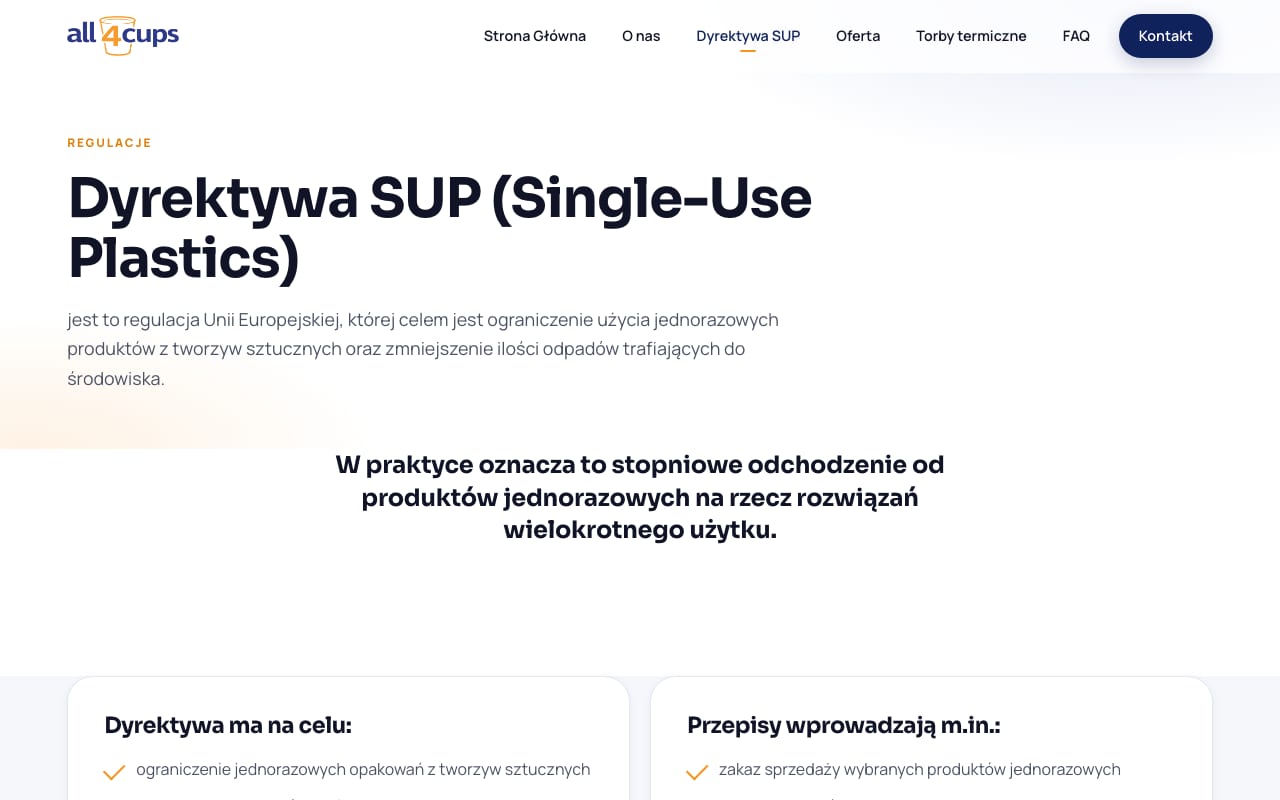
- 04 SUP Directive subpage: the regulations as a starting point for the conversation, not a footer line
- 05 Minimum quantities and branding techniques stated plainly in the content, taken from the business-facts file
- 06 Custom consent banner on localStorage: no script starts before the decision
- 07 Entrance animations with a safeguard: a JavaScript failure doesn't leave a blank page
- 08 Mobile menu, sticky header, FAQ accordion, and scrollspy in one dependency-free file
- 09 3D mug configurator built and shelved until a budget decision
Contents +
- Starting point
- Decisions that shaped the project
- WordPress as a panel, not as the site’s engine
- The form stays in WordPress
- Regulations as a subpage, not a footer line
- Minimum quantities written plainly
- Animations that can’t take the content with them
- Consent without a plugin and without spare scripts
- A configurator that isn’t on the site
- What came out of it
- Technically
Starting point
A festival organiser isn’t looking for “a mug”. They are looking for a mug that comes back from the wash for the next day, fits the single-use plastic regulations, and carries the sponsor’s logo. A company ordering end-of-year gifts is looking for something quite different, and both enquiries land in the same inbox.
So the problem wasn’t describing what all4cups can make. It was making sure that whoever lands on the site knows within a few seconds whether their order fits what this company does at all, and with which technique.
Decisions that shaped the project
WordPress as a panel, not as the site’s engine
The client had WordPress, and there was no reason to take it away: the form lives there, the access lives there, enquiries arrive there. The only reason for a change was the page builder every page ran through. It is also the kind of decision you make once for a company website and live with for years. We wrote it up in more detail in the piece on choosing WordPress or Next.js (in Polish).
The theme intercepts the request in template_redirect, checks whether the address matches an HTML file in the theme folder, and returns it directly. There is no loop, no assembling content from the database, no plugin rendering the layout. A list of exceptions (wp-admin, wp-json, wp-login.php, wp-content, wp-includes) is checked before anything else, so the panel and REST work exactly as before.
It needs saying plainly what this solution doesn’t do: WordPress still boots in full. It loads options, plugins, and the session before the theme gets a chance to intercept the request. Page rendering goes away, WordPress doesn’t. Otherwise neither the panel nor the form endpoint would work.
The trade-off is fair, and it has a name: the client no longer edits content by clicking in the editor. Changing a text means changing a file and uploading the theme. In return, the site stops depending on a plugin that may stop being maintained in two years, and loads as a plain file.
The form stays in WordPress
A static front end doesn’t need an external form service. The form collects data in the browser and sends it to a Contact Form 7 endpoint over REST, so to the same plugin and the same inbox the client used before. Quote requests don’t pass through a third company, and nobody has to describe them in the privacy policy as entrusting data to someone else.
The same form handler recognises whether it runs in production or in a local mockup. In the mockup it sends nothing and says so plainly, instead of pretending the message went out.
As for the form’s content: the fewer the fields, the more enquiries. But with orders that start at eighteen thousand pieces, a few qualifying questions save both sides a week of correspondence. We wrote up this trade-off separately, in the piece on the contact form that generates leads (in Polish).
Regulations as a subpage, not a footer line
The single-use plastic directive is the reason an organiser starts looking for a reusable cup at all. Burying that topic in a paragraph at the bottom of the homepage would waste the best sales argument this industry has.
So it got its own subpage explaining what is changing and when. That is also a separate search query and a separate moment, when someone is looking for an answer, not a product.
Minimum quantities written plainly
IML from 18,000 pieces, up to six designs within the minimum, capacities of 0.3, 0.4, and 0.5 litres. UV printing with no minimum. Sublimation and laser in any quantity.
These numbers live in a separate business-facts file and are the only source for the content. The temptation to write “we handle orders of any size” is strong, and it costs hours of replying to people for whom the answer is “not with this technique”. A site that says “no” earlier leaves enquiries in the inbox that are worth answering.
Animations that can’t take the content with them
Sections appear on scroll, which is nice right up to the moment JavaScript fails to run. Then an element with its opacity set to zero stays invisible, and the visitor sees a blank page with no idea that anything went wrong.
So there are three safeguards. Elements already in view on load get their final state immediately, without a transition, so the page doesn’t flicker on refresh. With prefers-reduced-motion or no IntersectionObserver, everything is simply visible. And a fallback script checks after a moment whether the heading rendered at all, and if not, forces everything visible.
Consent without a plugin and without spare scripts
The consent banner is a few dozen lines: the choice saved in localStorage, a button in the footer to change the decision, an a4:consent event as a hook. Until the user decides, no analytics or marketing script starts, because none is wired in. The place for one is prepared and waiting.
A configurator that isn’t on the site
A 3D mug preview studio was built for the project: custom meshes, graphic overlay, packshot export. It isn’t linked from the navigation, the footer, or any button.
The client has no budget for a site with a configurator right now, and shipping such a tool “on the side” would mean support, fixes, and questions for the life of the project. The code, the decision, and the way to bring it back are written down. The feature now waits only for a decision on timing.
What came out of it
Homepage measurement from 13 September 2026, browser with no cache, wired connection: 187 ms to first byte, 0.44 s to first contentful paint, 0.51 s to the load event. Fifteen requests for the whole page: the document, two stylesheets, one JavaScript file, seven images, and four font files. The only host outside the client’s domain is Google Fonts.
A fair note on these numbers: there is no before-and-after here. The previous version on the page builder was replaced before anyone measured it, so we don’t have its results and we are not going to estimate them. What is above is the state after launch, not proof of an X per cent improvement.
There is still headroom on this site, and it is clear where: 624 kB of transfer is almost entirely images. The theme’s own code is 45 kB of styles and 9 kB of script. If we ever need to go lower, we would touch the graphics, not the architecture. That is exactly the case we describe in the Core Web Vitals checklist (in Polish).
Technically
A dependency-free WordPress theme: one functions.php file with routing and MIME types, one stylesheet built on CSS variables, one JavaScript file for all interactions. The brand colours live in --navy and --orange, not in classes. Content written in a local mockup, deployed as a theme package, form on Contact Form 7 over REST. The 3D mug studio runs on Three.js and is kept out of the public navigation.
One caveat for the future, because it is a real risk of this setup: since the site is a package of files, not entries in a database, a change made directly on the server is lost on the next theme upload. Deployment has to come from the repository, or not at all.
Screenshots
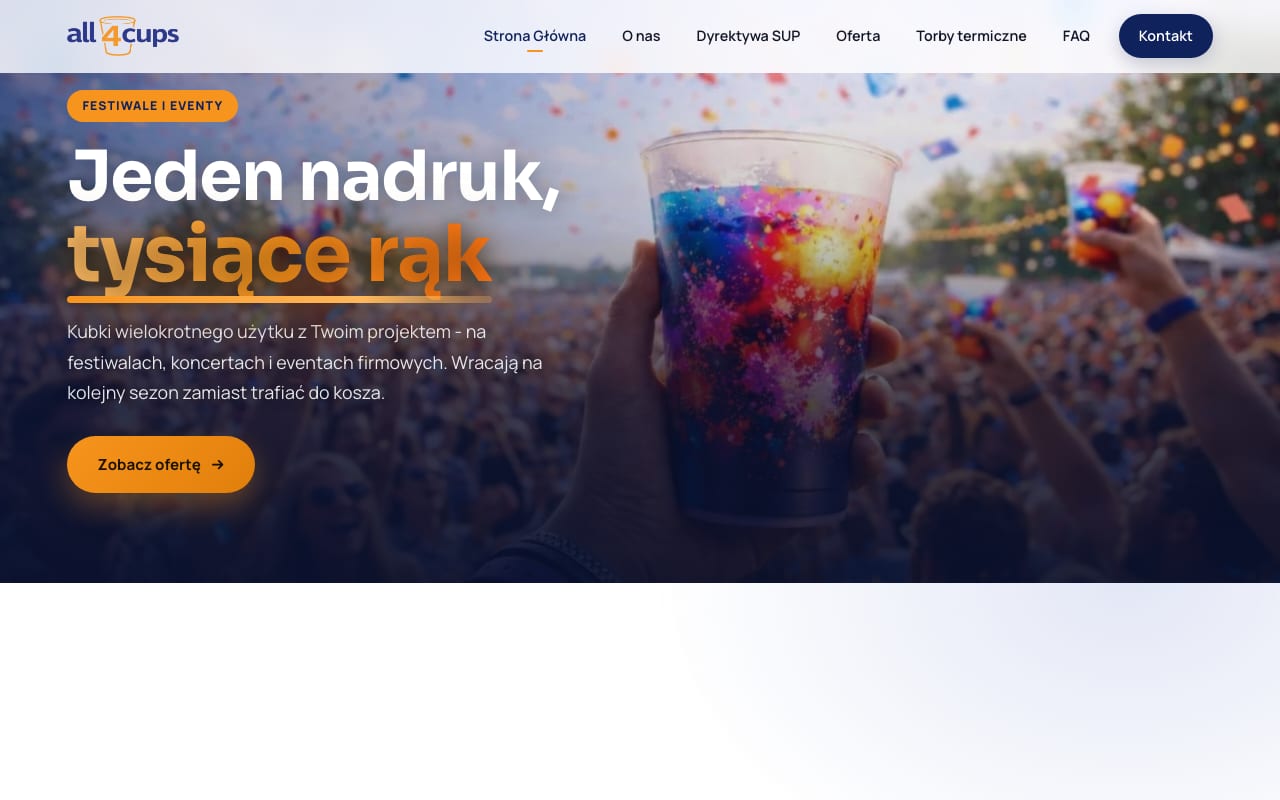

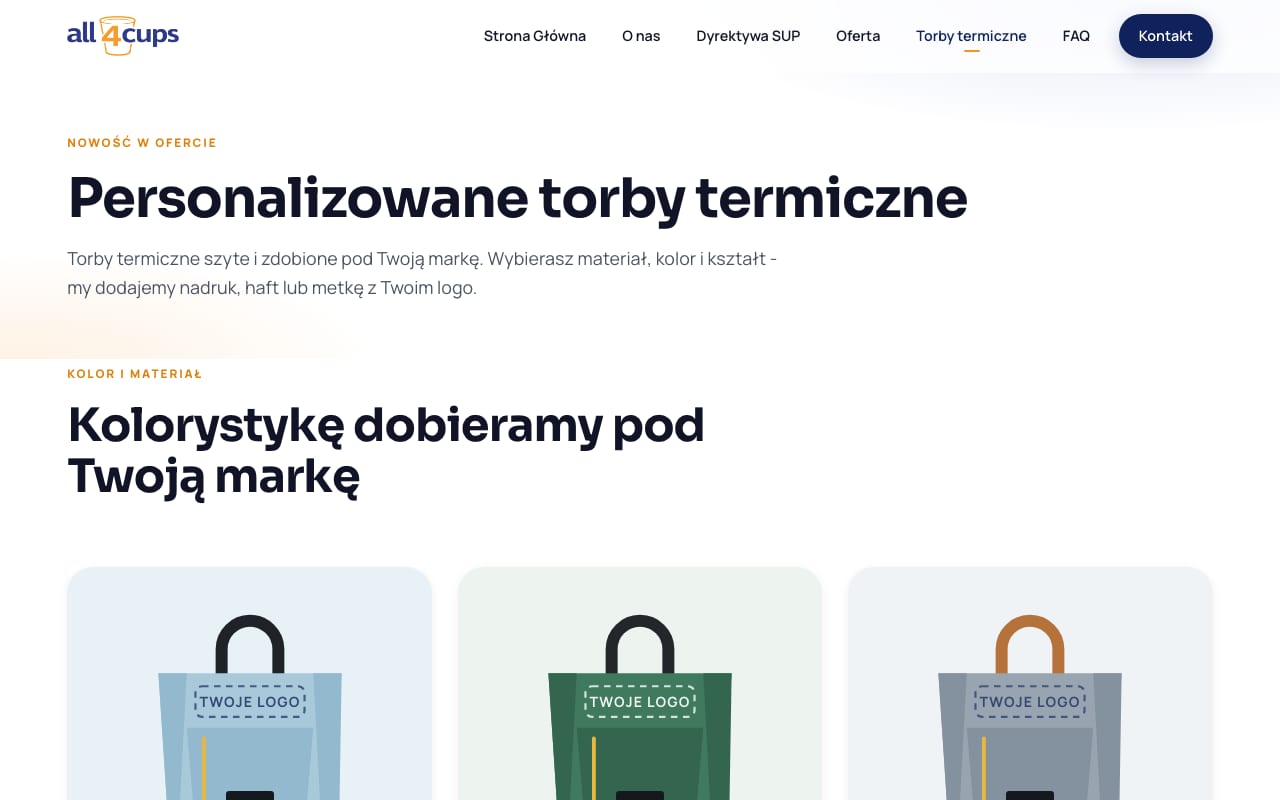
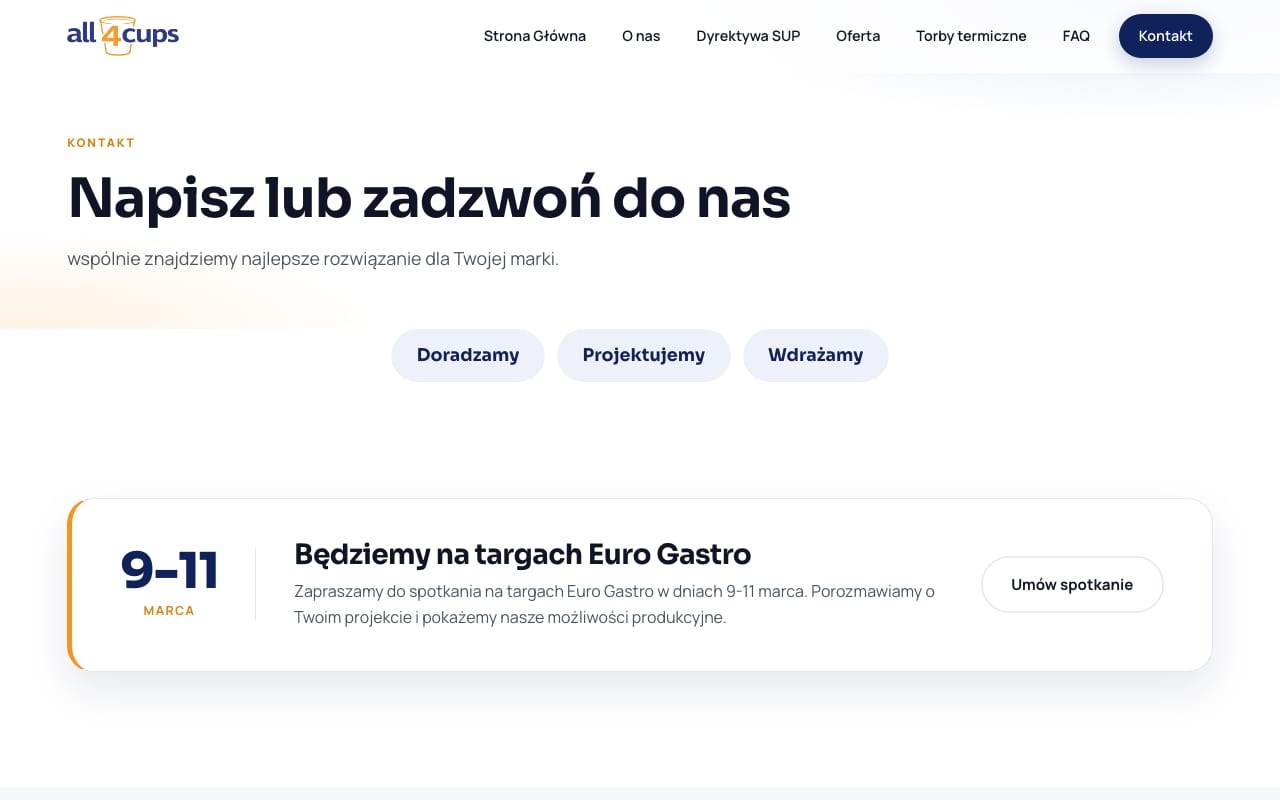



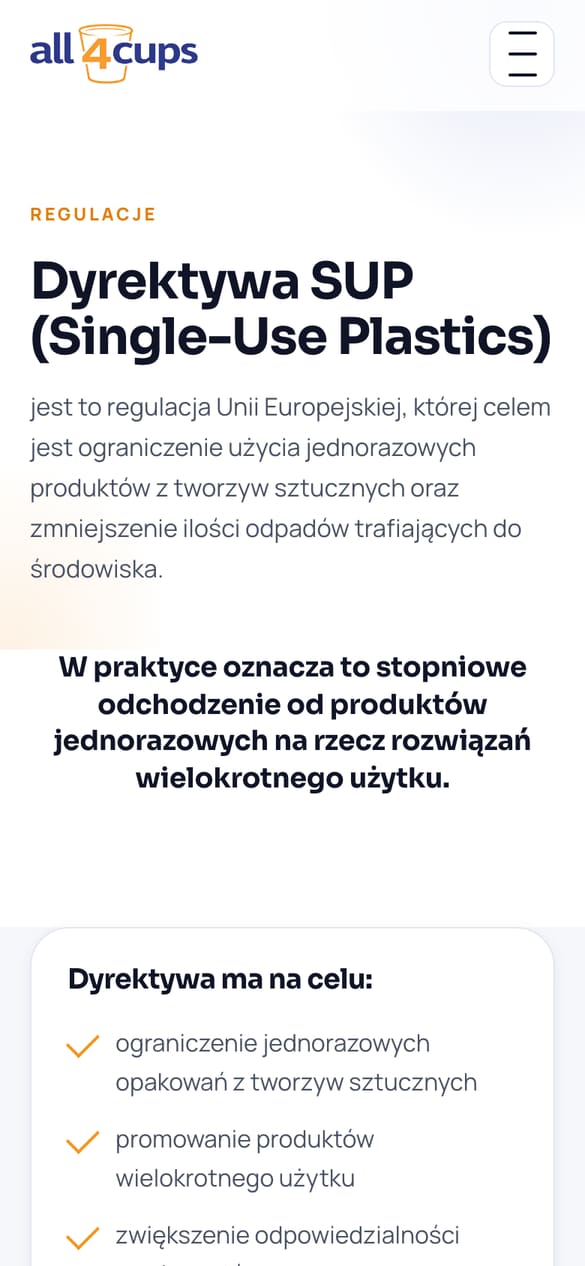

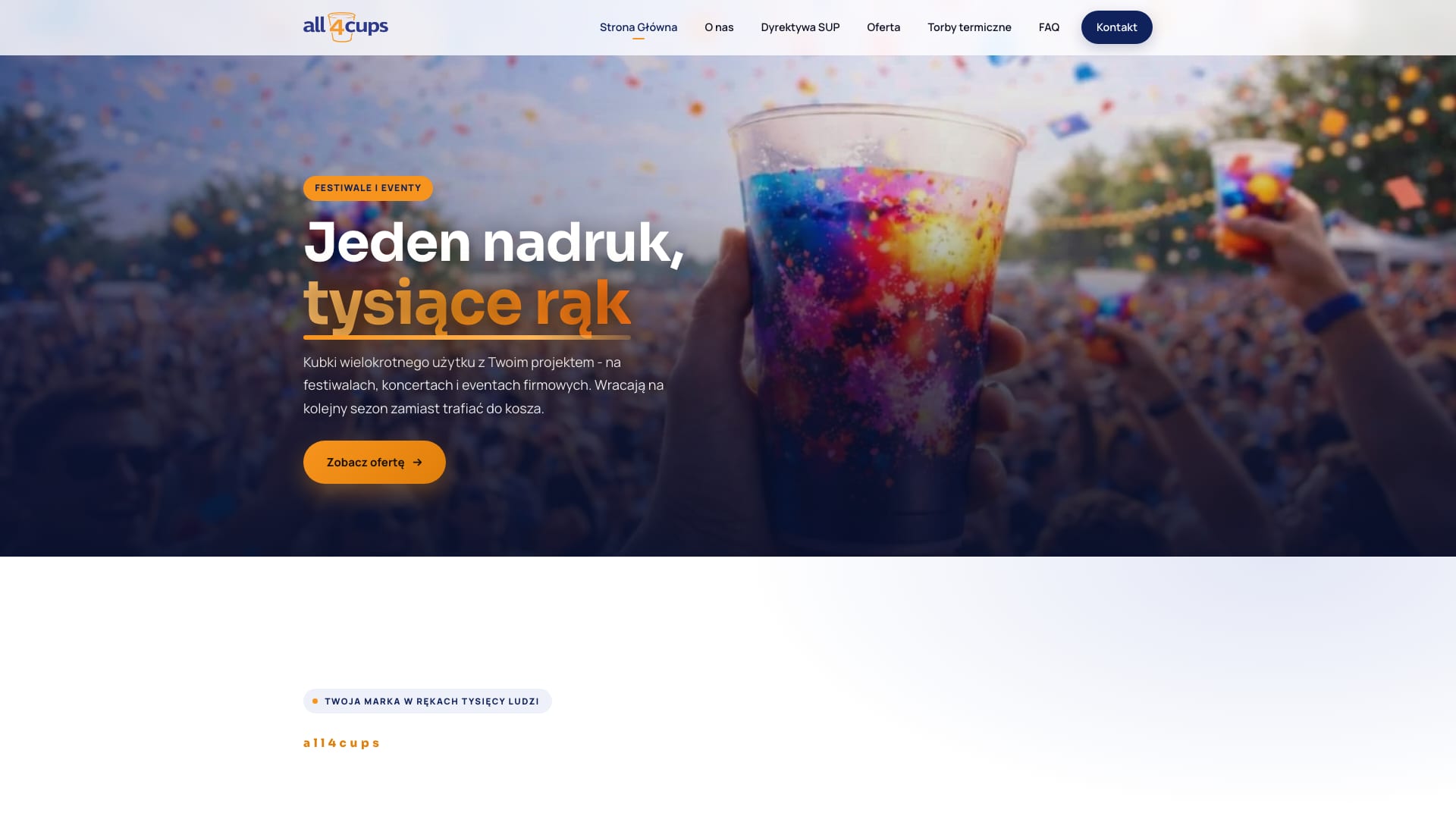
The first screen says in one sentence what these mugs are and why they come back for another season instead of ending up in the bin.
A similar problem to solve?
Tell us briefly what it is about. We will send a quote within 24 hours.
Ask for a quote →