
Business website · Agnieszka - bioagnes · 2026 · 5 weeks
bioagnes - an Astro company site with a 24-service catalogue
One file with the data for 24 services feeds the mega-menu, the list, the generated subpages, the footer, and SEO at once. Adding a service is one entry in a file, not six places to keep in sync.
- Astro 4
- TypeScript
- CSS Custom Properties
- PHP
- PHPMailer
- GitHub Actions
The challenge
Agnieszka provides environmental compliance services for companies across Poland: BDO, KOBiZE, LUCID, packaging reporting, product fees, water-law permits. That is over twenty separate services, each a distinct Google query and a distinct problem for a business owner. Dumping them all onto one "Services" page would mean none of them ranks well in Google, and a customer searching specifically for a BDO report wouldn't see that Agnieszka does exactly that.
Our solution
We built a site in Astro where the service catalogue lives in one TypeScript file and feeds the mega-menu, the service list, the generated subpages, the footer, and the structured data at once. The four most-searched services (BDO, KOBiZE, LUCID, and the water-law permit) got their own hand-written pages. The contact form runs on PHP-FPM, with no external service.
15 ms
Time to first byte
0.35 s
First contentful paint
11
Requests for the homepage
What we built
- 01 24 services from a single data source
- 02 Four dedicated pages: BDO, KOBiZE, LUCID, water-law permit
- 03 Generated /uslugi/[slug] subpages for the rest
- 04 Mega-menu in three groups, fed by the same file
- 05 FAQ at the bottom of every subpage, a native accordion with no JS
- 06 JSON-LD FAQPage from the same questions as the FAQ section
- 07 Brand colour as a single CSS variable injected into the body
- 08 Form on PHP-FPM with PHPMailer, no external service
Contents +
Starting point
A business owner isn’t searching for “environmental compliance services”. They are searching for “BDO report deadline”, “KOBiZE report who for”, “LUCID registration packaging”. Each of those queries is a different moment of panic and a different service, and all of them lead to the same person.
Most of the work was keeping over twenty services consistent when each one needs its own address, its own description, and its own place in the navigation. That is exactly the point of a company website that has to grow without being rewritten from scratch every time a new service is added.
Decisions that shaped the project
One file as the source of truth
src/data/services.ts holds the entire service catalogue. The same file generates the mega-menu, the list at /uslugi, the /uslugi/[slug] subpages, the footer links, and the SEO data. Adding a service is one entry, not six places where you have to remember the same change.
The alternative, hand-writing twenty-four subpages, would be faster in the first week and unmaintainable by the sixth month. The first mismatch between the menu and the footer shows up on the third edit.
Two levels of detail, not one
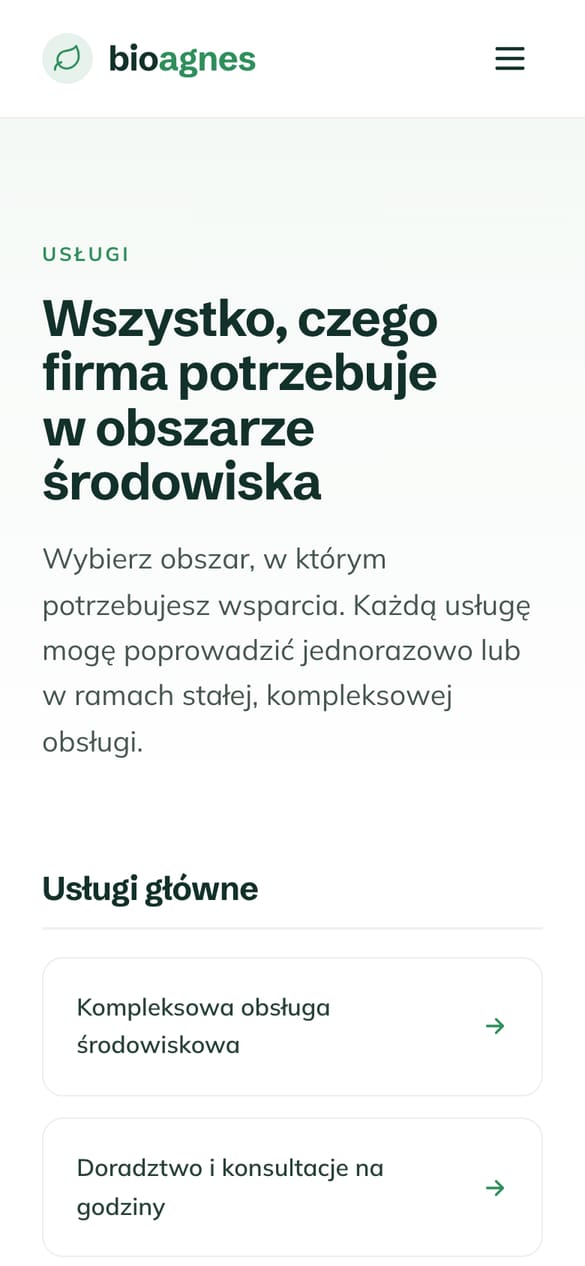
Not every service is equal. BDO, KOBiZE, LUCID, and the water-law permit are the highest-volume and most complex queries. They got their own layout and copy that answers specific doubts. The rest use a shared template, because twenty pages with the same structure are enough to catch the long tail.
That is a trade-off: full hand-built work for four pages instead of half the work spread across twenty-four.
FAQ at the bottom of every page, not in a tab
The FAQ section is wired into the layout, so it appears at the bottom of every subpage. A client reading about a BDO report gets the answer to “is this expensive” and “what if I’m late” right where they started to hesitate, not in a tab they would have to go back to.
The accordion is a native <details name="faq">: one open at a time, zero JavaScript, works from the keyboard and with a screen reader without writing ARIA roles. Accessibility comes for free, because the browser does what would otherwise have to be coded by hand (we cover this more broadly in the piece on WCAG accessibility for Polish companies (in Polish)). The same questions feed the FAQPage structured data, so the answers can appear directly in Google.
Brand colour as one variable
The accent lives in --ac and is injected onto <body> from a config file. Changing the brand colour is one line, not a search through a stylesheet. No Tailwind: on a site with one consistent theme, CSS tokens are enough, and there is no configuration to maintain or unused classes to clean up.
A form without an external service
The front end is static, and contact.php on PHP-FPM with PHPMailer and SMTP handles sending. An external form service would mean the clients’ contact data passes through a third company. For a consultancy, where an enquiry often names a company and the scale of its business, that is an unnecessary risk and an unnecessary line in the privacy policy. It is the same trade-off we describe for the contact form that generates leads (in Polish): fewer middlemen, more control over where the enquiry lands.
What came out of it
Homepage measurement from 13 September 2026, headless Chrome 1366×900, no cache: 15 ms to first byte, 0.35 s to first contentful paint, 0.44 s to the load event. Eleven requests: the document, three stylesheets, one JavaScript file, two images, and four font files. 249 kB of transfer, the lowest of our recent projects.
These numbers come from one synthetic measurement, not from real users. We also don’t have a result from the previous version of the site to compare, so we don’t write about an X per cent improvement, because we didn’t measure it. They show the state of the site with the full catalogue of twenty-four services, not the effect of a change. If we ever need more headroom, it is in the four font files, which is exactly what we describe in the Core Web Vitals checklist (in Polish).
Technically
Astro 4 in static mode, TypeScript, tokens in global.css instead of Tailwind. The blog is on Content Collections. Deployed from main through GitHub Actions to a VPS: nginx serves the static files, and PHP-FPM handles the single form endpoint.
Screenshots
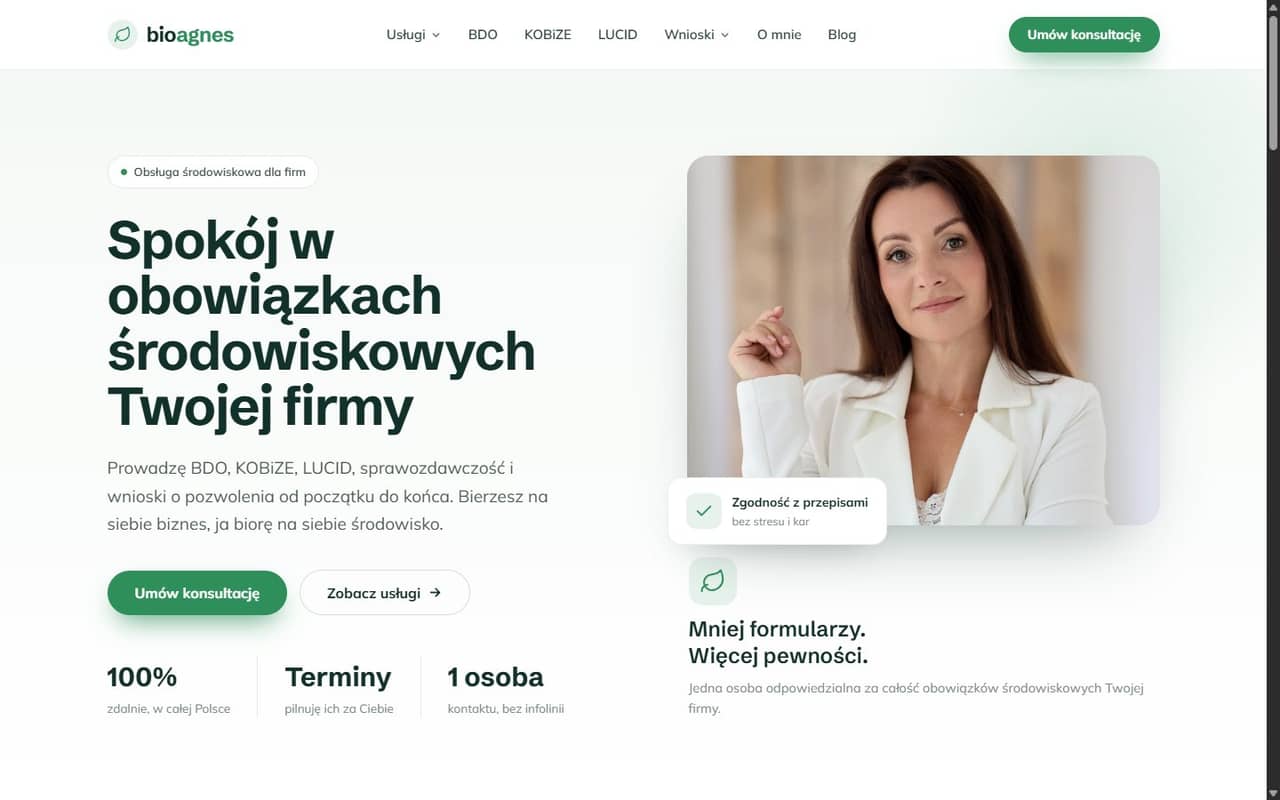
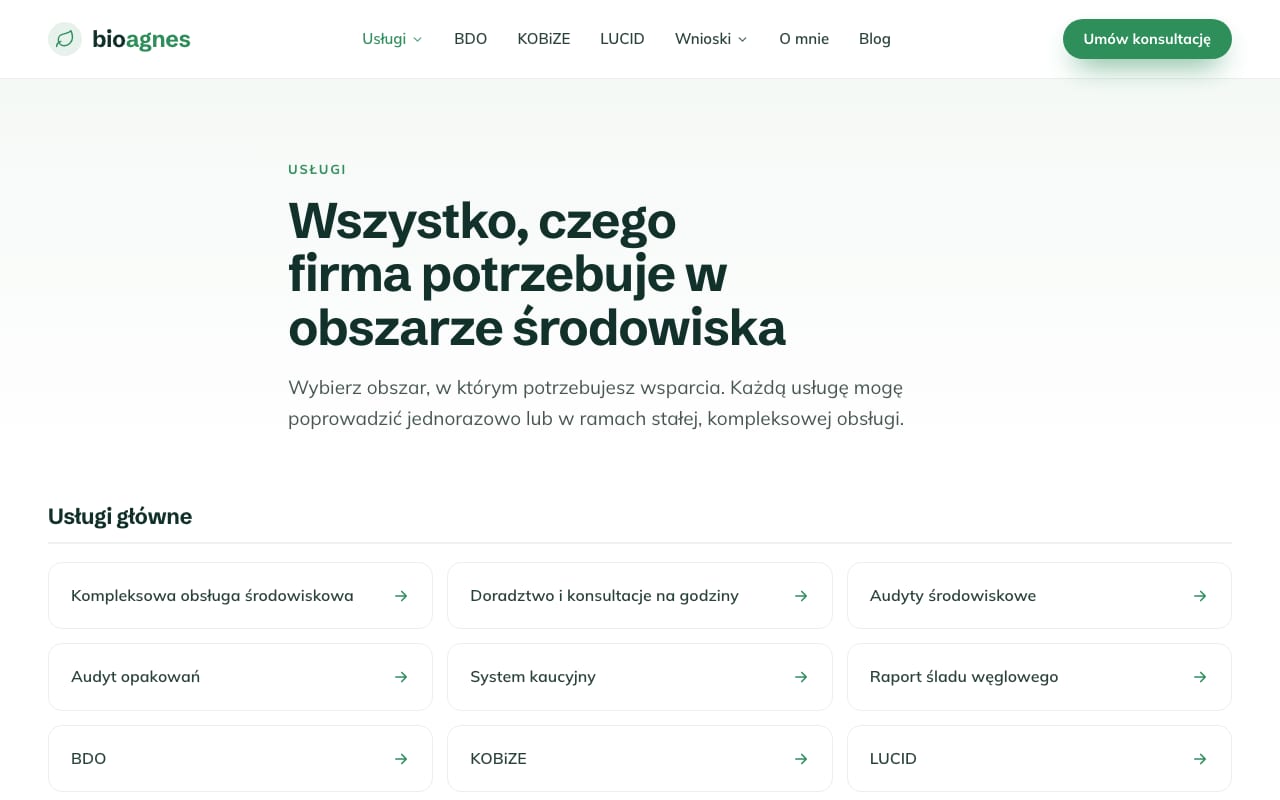
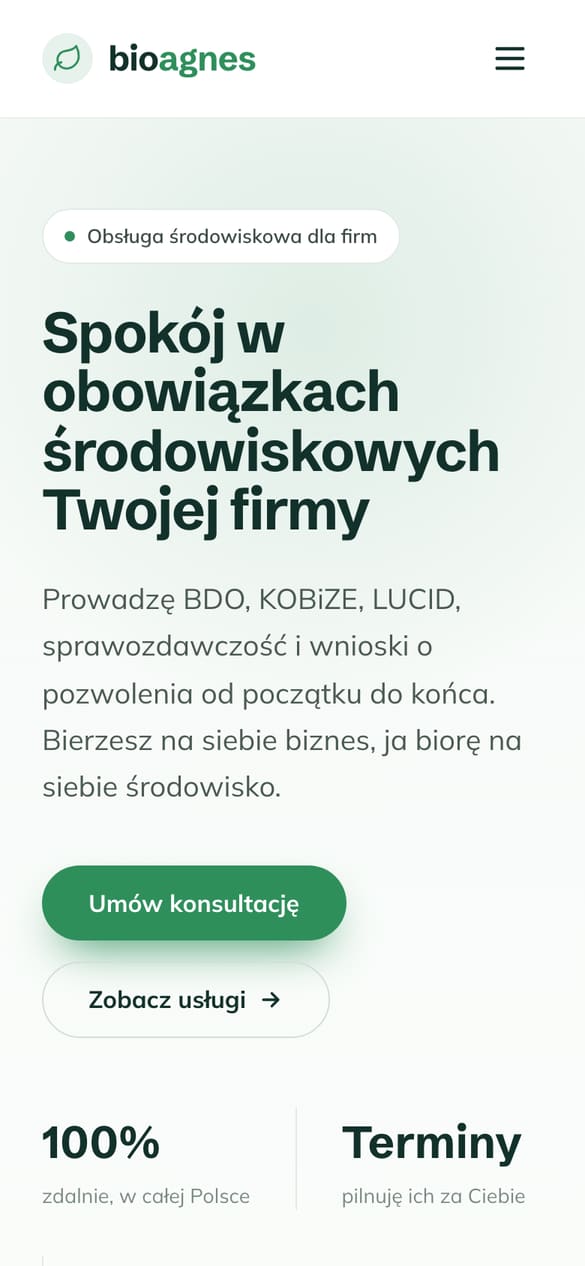
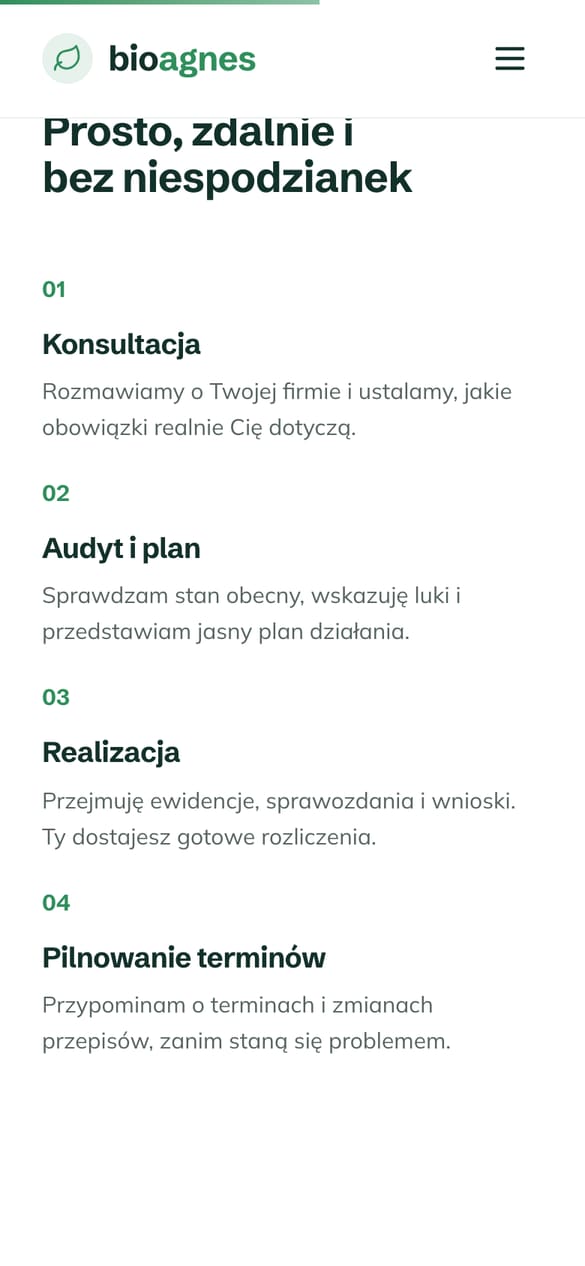
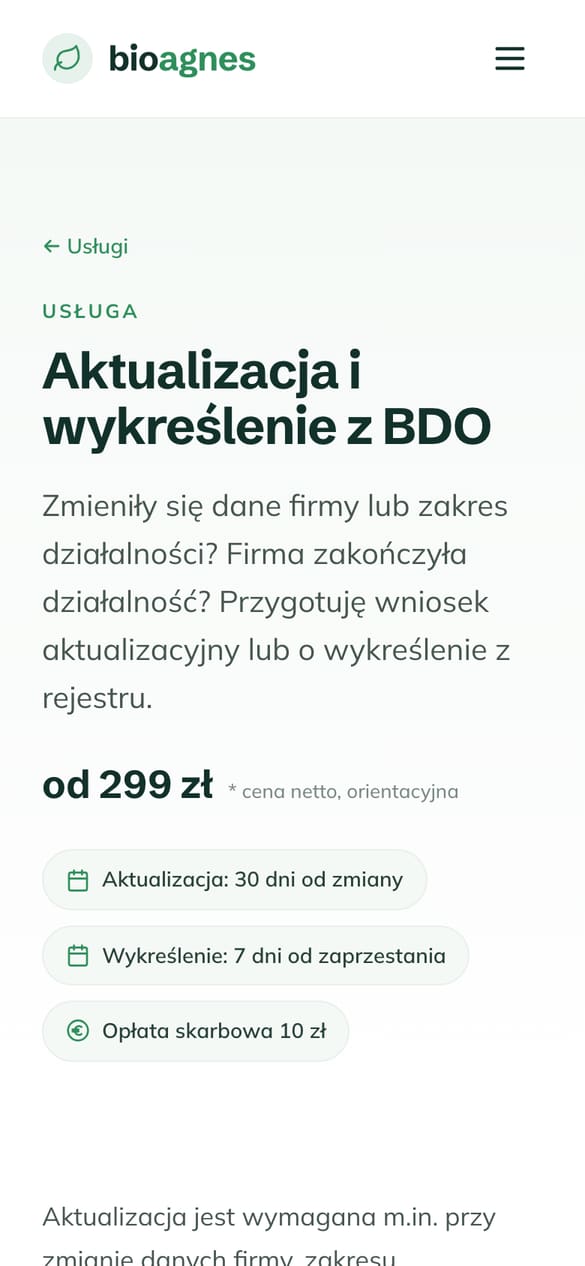
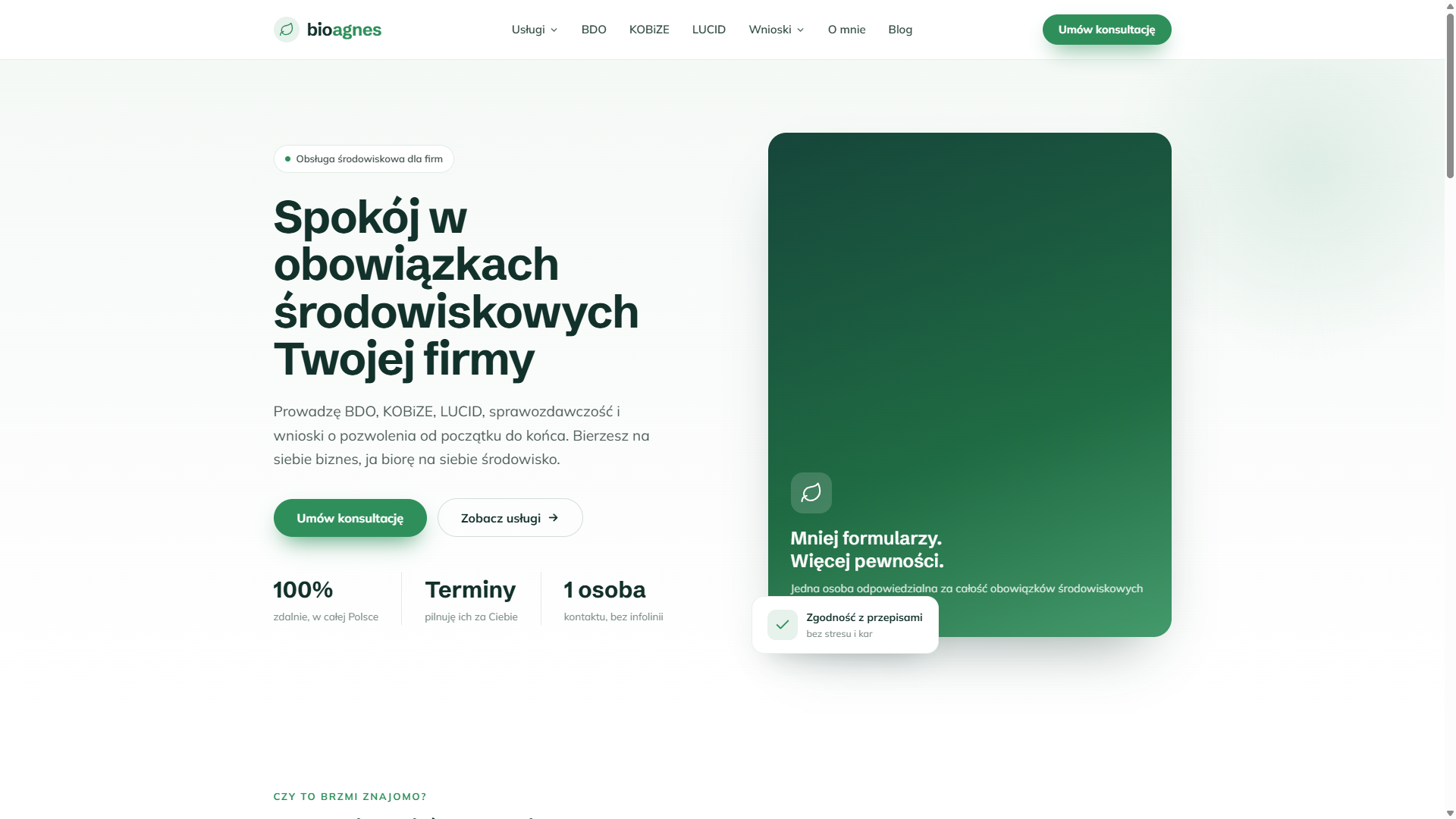
The first screen with two buttons and the numbers that build trust: 100% remote, deadlines tracked, one point of contact.
A similar problem to solve?
Tell us briefly what it is about. We will send a quote within 24 hours.
Ask for a quote →